Honouring Coast Salish Origin Stories
At 9:00am on July 1st, cars began turning off the Pat Bay Highway and north onto Lochside Drive – for some, towards some place special never before visited.
For those who hadn’t ever passed under the old timey wooden archway at the north end of Lochside Drive or followed their curiosities to learn more about the open field lined with farm equipment beside Highway 17, they were surprised to meander down the road leading into Heritage Acres and suddenly find themselves in a quaint village square of model heritage buildings nestled among the Douglas firs.
And that’s not all visitors to Heritage Acres discovered this Canada Day.
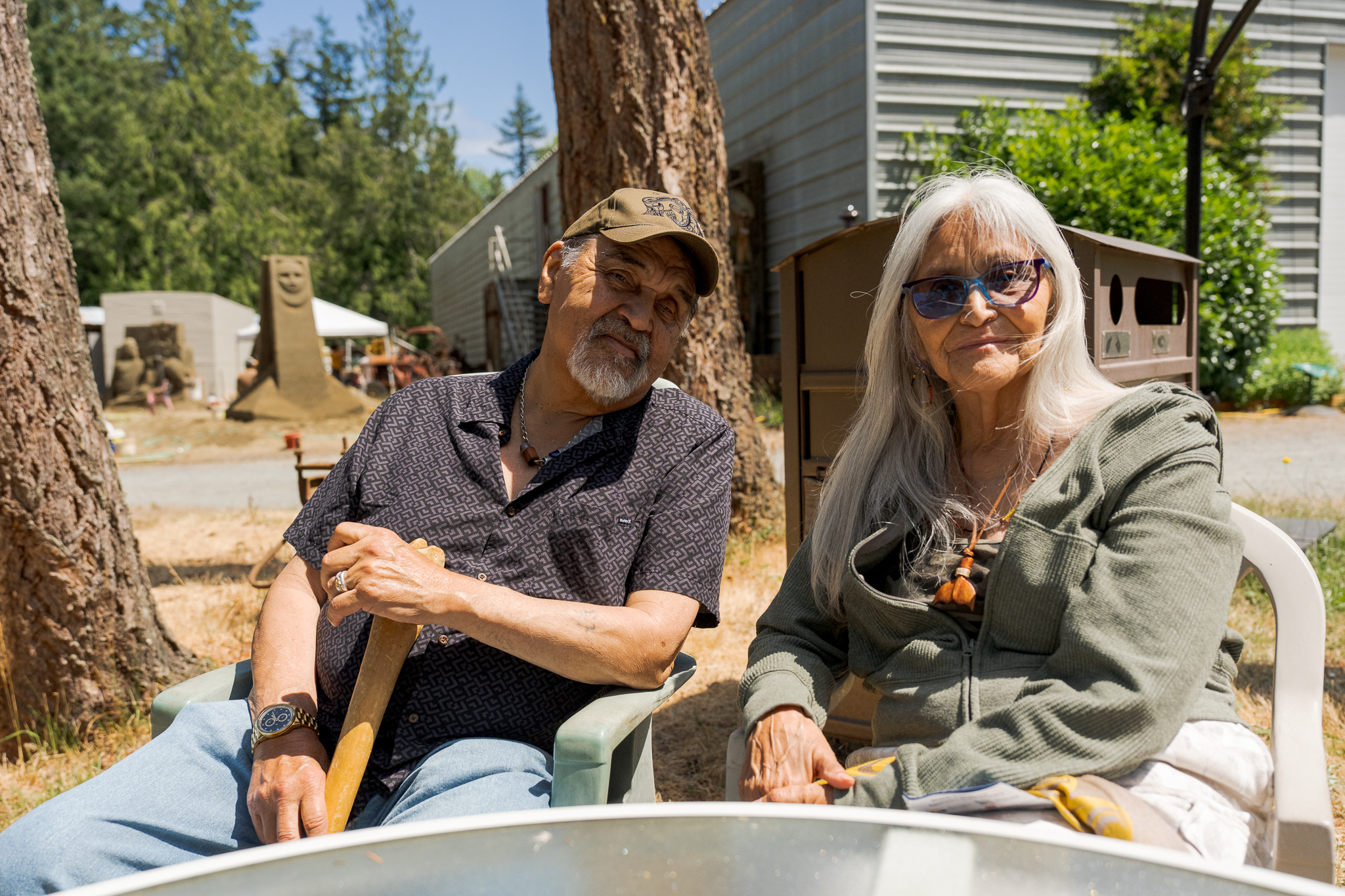
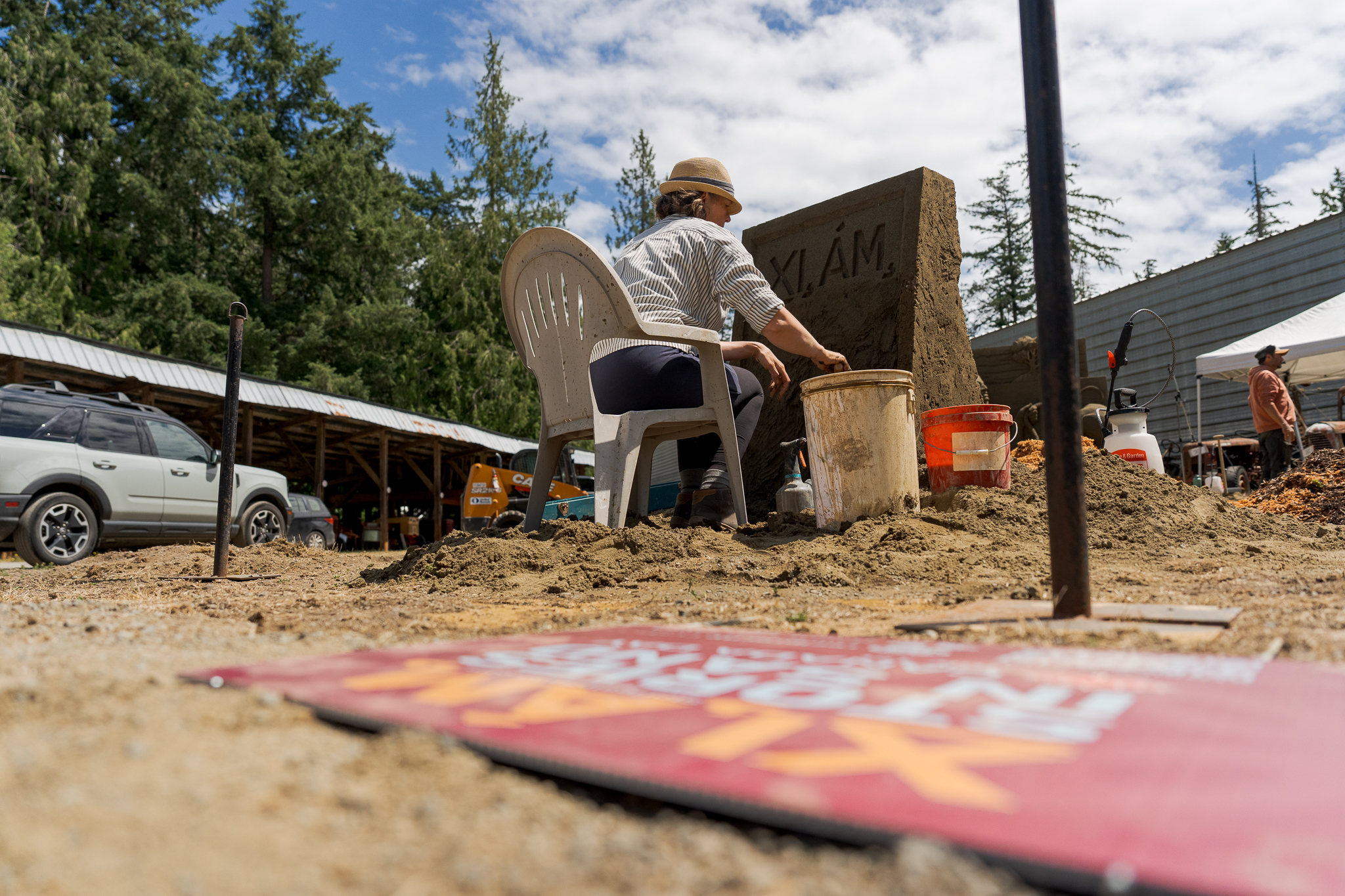
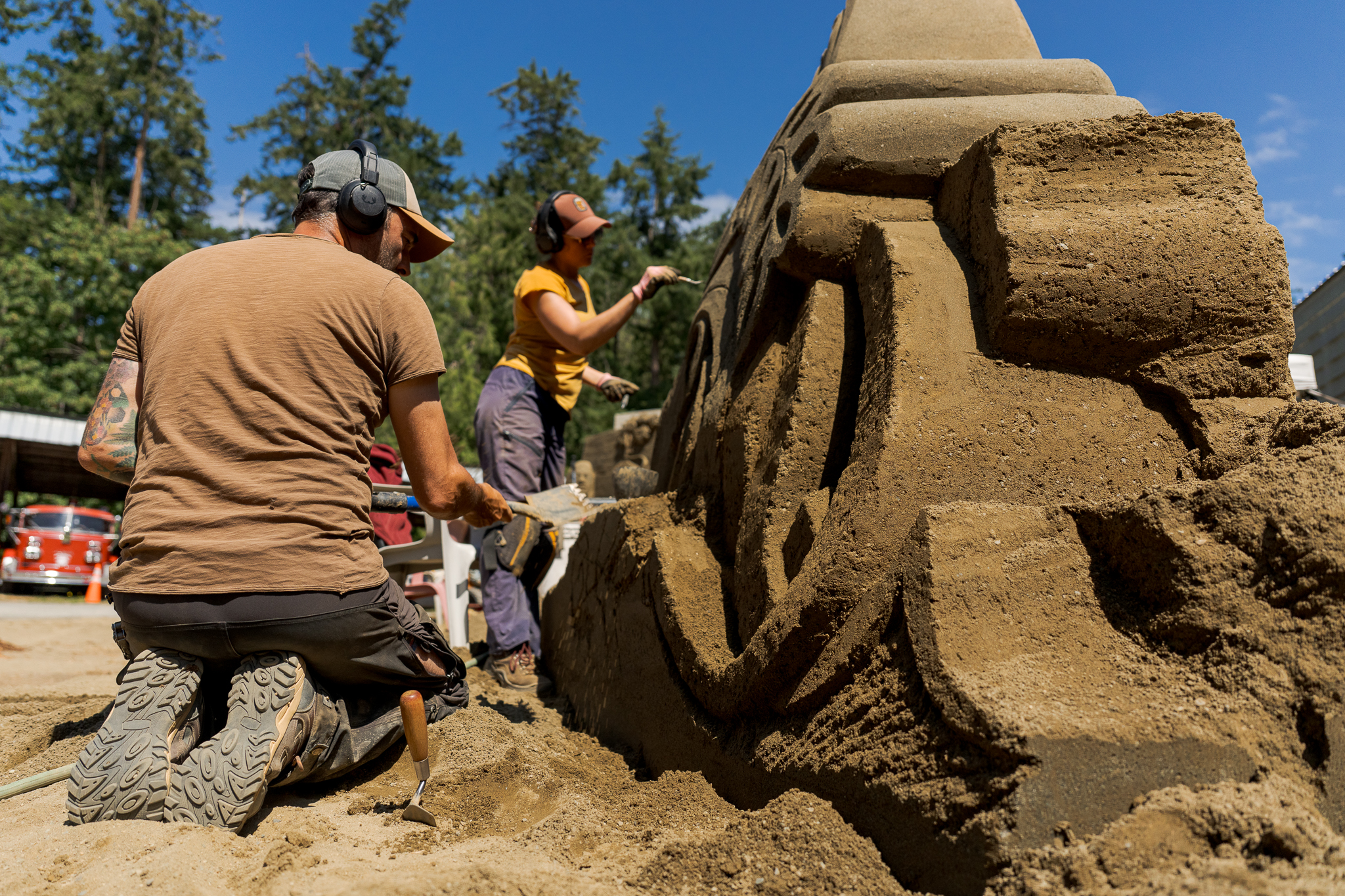
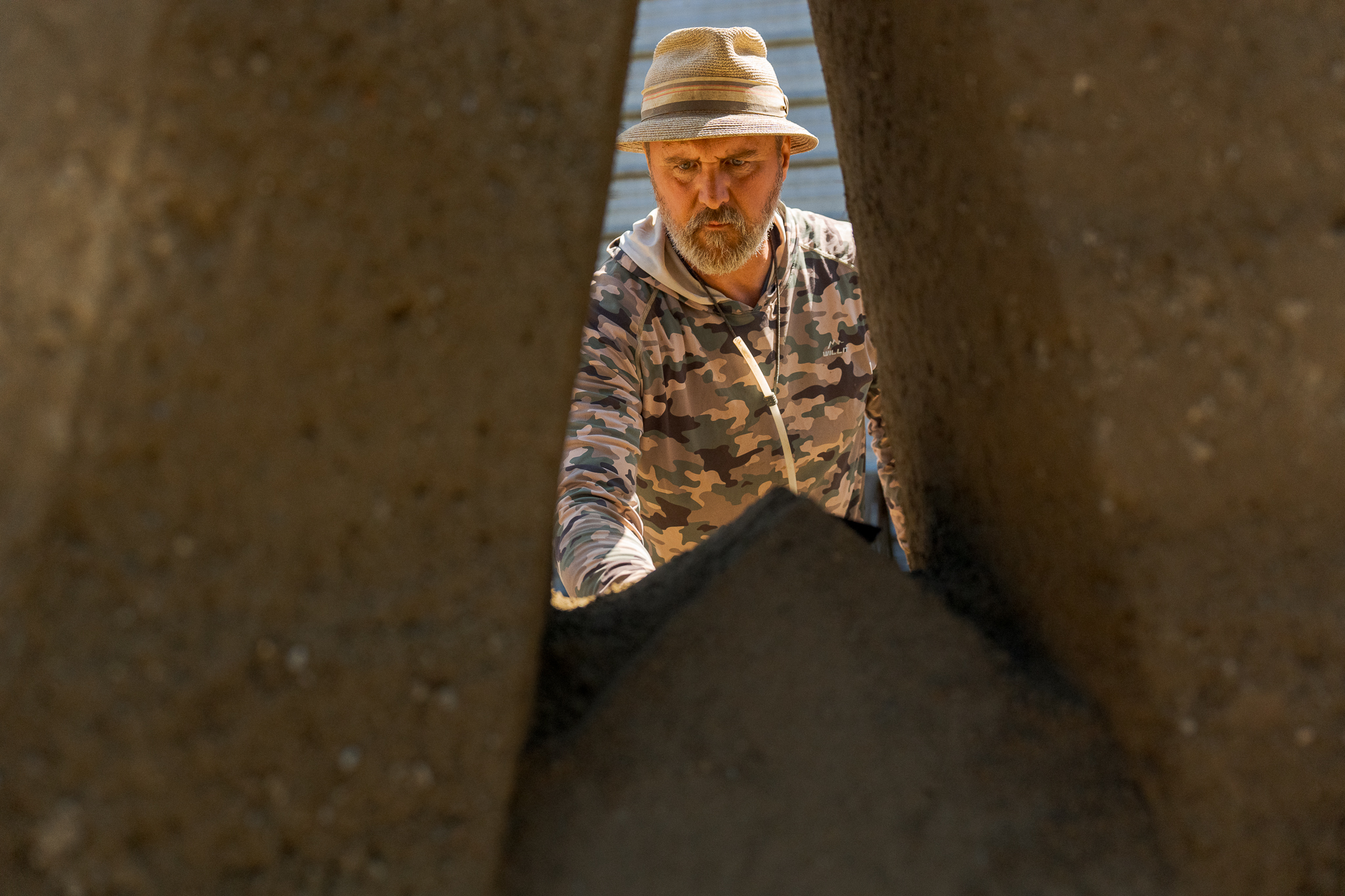
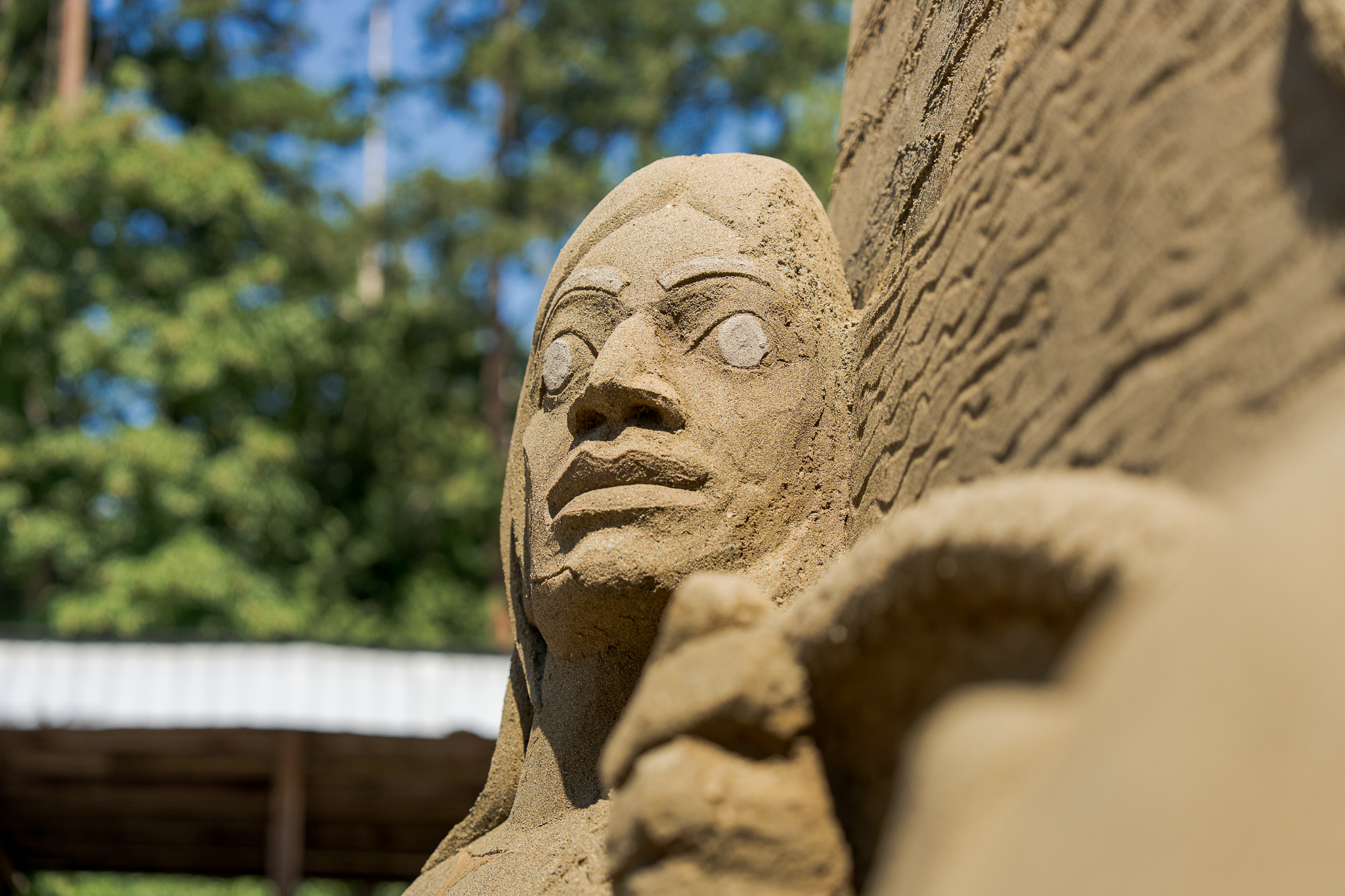
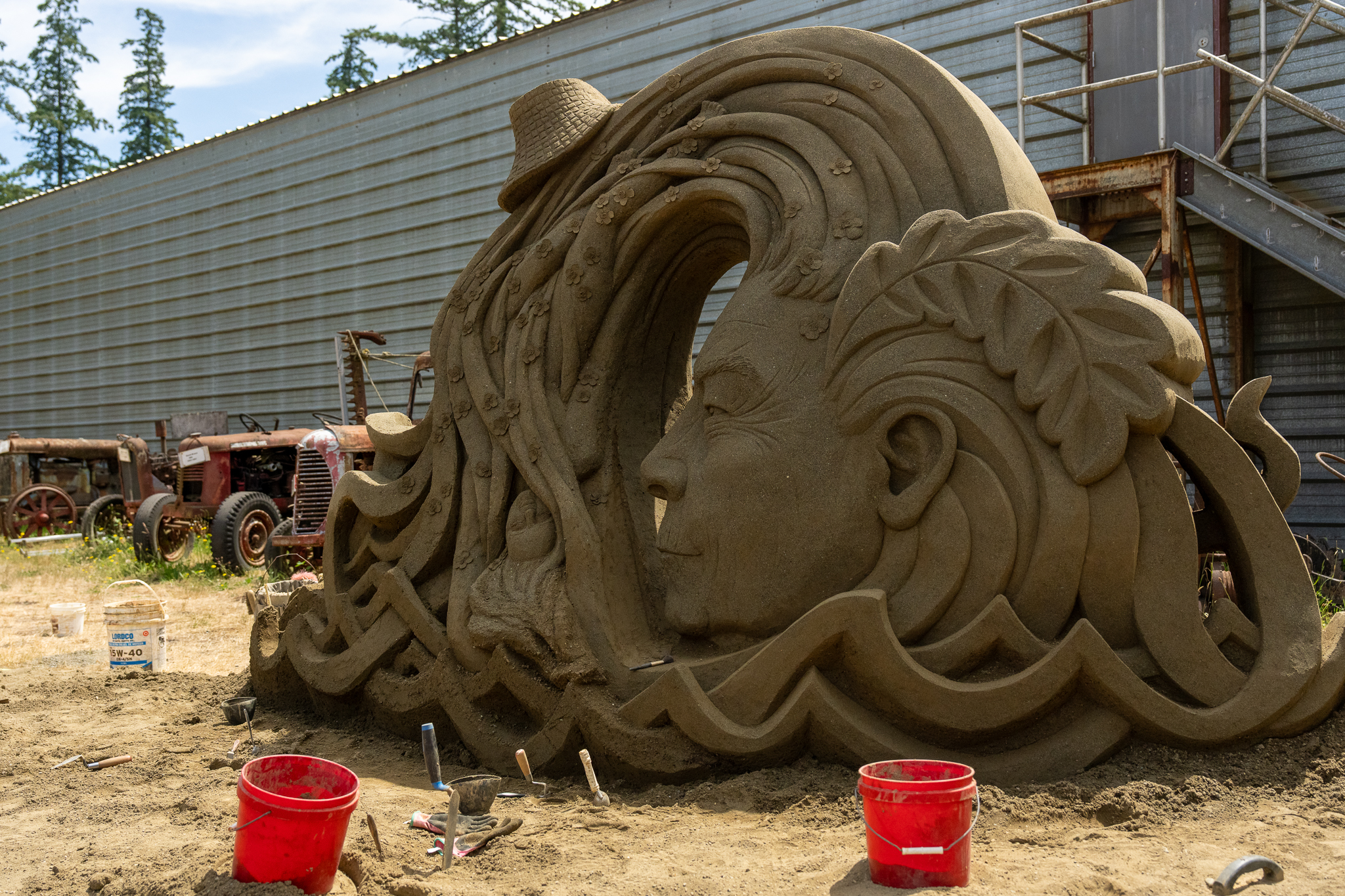
After 40+ hours of construction and hand carving, world champion sand sculptors Damon Langlois, Sèveline Beauregard, Joris Kivits and Dmitry Klimenko had pulled off a feat whose magic never fails to inspire awe. Fuelled by sandwiches, laughter and meditative podcasts under their headphones, by July 1st, they had created three meticulous 10 ft tall sculptures depicting Coast Salish origin stories shared with them by renowned local Indigenous artists and storykeepers Doug Lafortune, Sarah Jim, and lessLIE.
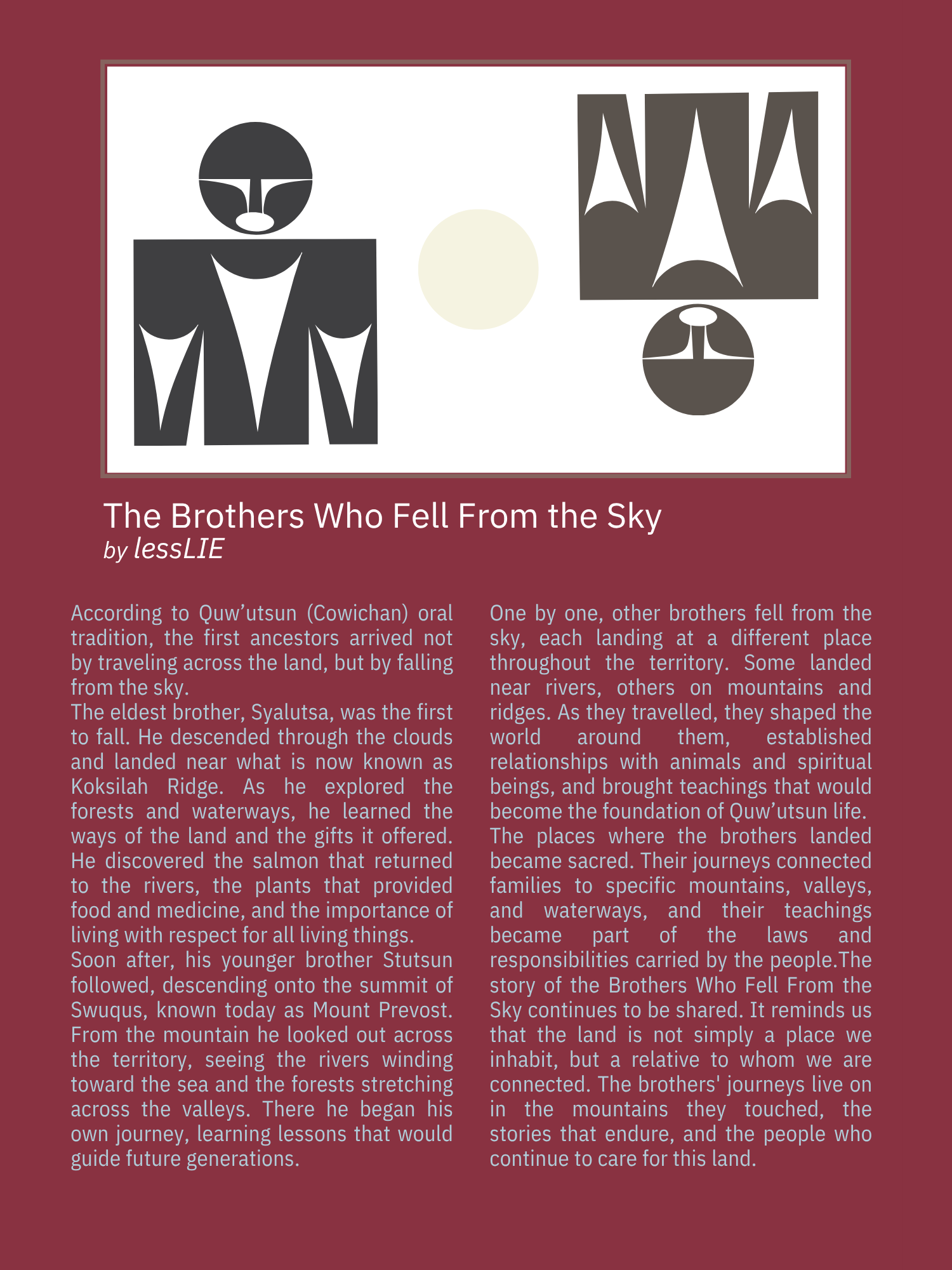
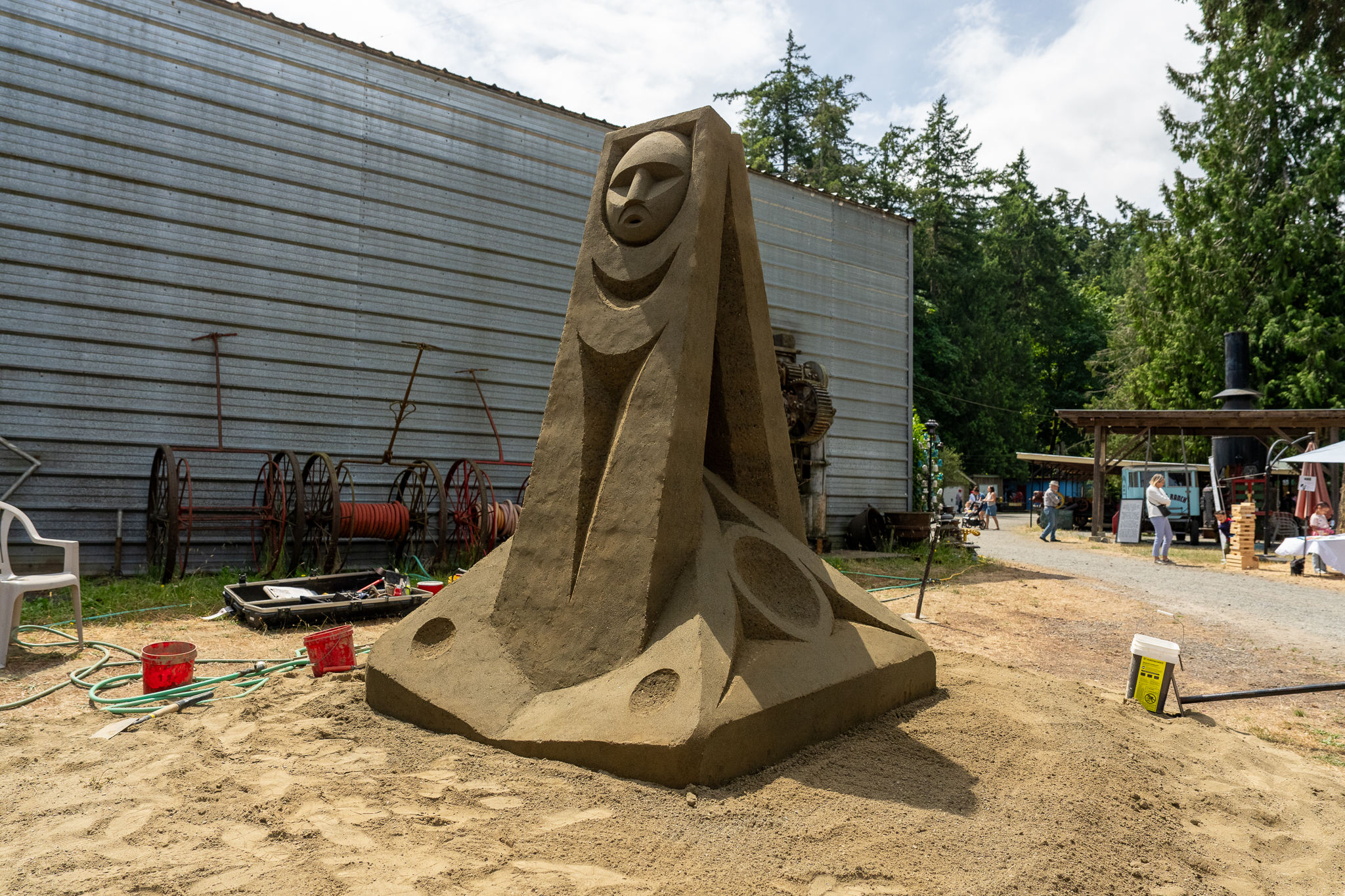
Indigenous Artist
lessLIE is a contemporary Coast Salish artist born in 1973 in Duncan, British Columbia. Of Cowichan, Penelakut, and Esquimalt ancestry, as well as Irish, Italian, and French heritage, lessLIE is recognized for his bold and thought-provoking approach to Indigenous art. His work blends traditional Coast Salish design with contemporary themes, often using humour, irony, and social commentary to challenge perceptions and spark conversation.
He began studying Coast Salish art in 1995 while completing a Bachelor of Arts in First Nations Studies at Vancouver Island University. Influenced by artists such as Susan Point and Robert Davidson, lessLIE developed a distinctive style rooted in Coast Salish traditions while pushing the form into contemporary spaces. He later pursued graduate studies at the University of Victoria focused on Coast Salish art history and criticism.
Working across painting, printmaking, design, writing, and curatorial projects, lessLIE’s work has been exhibited nationally and internationally, including in London, Vancouver, Victoria, and Ottawa. His artwork is held in major collections including the National Gallery of Canada and the Art Gallery of Greater Victoria.
Known for modernizing Coast Salish visual language while remaining deeply connected to tradition, lessLIE continues to explore identity, culture, history, and contemporary Indigenous experience through his art and writing.
Sand Artist (and Creative Director!)
Damon Langlois is a local sand sculptor, and designer known for his work in international sand sculpture events and product design. A five-time World Championship of Sand Sculpting winner, Langlois has spent decades competing and collaborating with artists around the world, earning recognition for both his technical ability and imaginative storytelling through sculpture.
In addition to his competition work, Langlois served as creative director and engineer for the 2015 Guinness World Record tallest sandcastle project. Built alongside the Sand Sculpture Company, the structure reached 45 feet, 10.25 inches, pushing the technical boundaries of vertical sand sculpture at the time.
Langlois is also the author of Stories in Sand: The Arabian Nights, a book combining photographic documentation of large-scale sculptures with adapted stories from The Arabian Nights. The project grew out of his role as creative director of the Remal International Festival in Kuwait, one of the largest sand sculpture parks ever created. There, he led artistic research and direction for an international team of sculptors creating monumental scenes inspired by the classic tales.
That experience is the foundation of this version of Stories In Sand, exploring the deeper stories of this land. He is the cofounder of X̱I¸ÁM¸ Stories In Sand with Chief Abraham Pelkey.
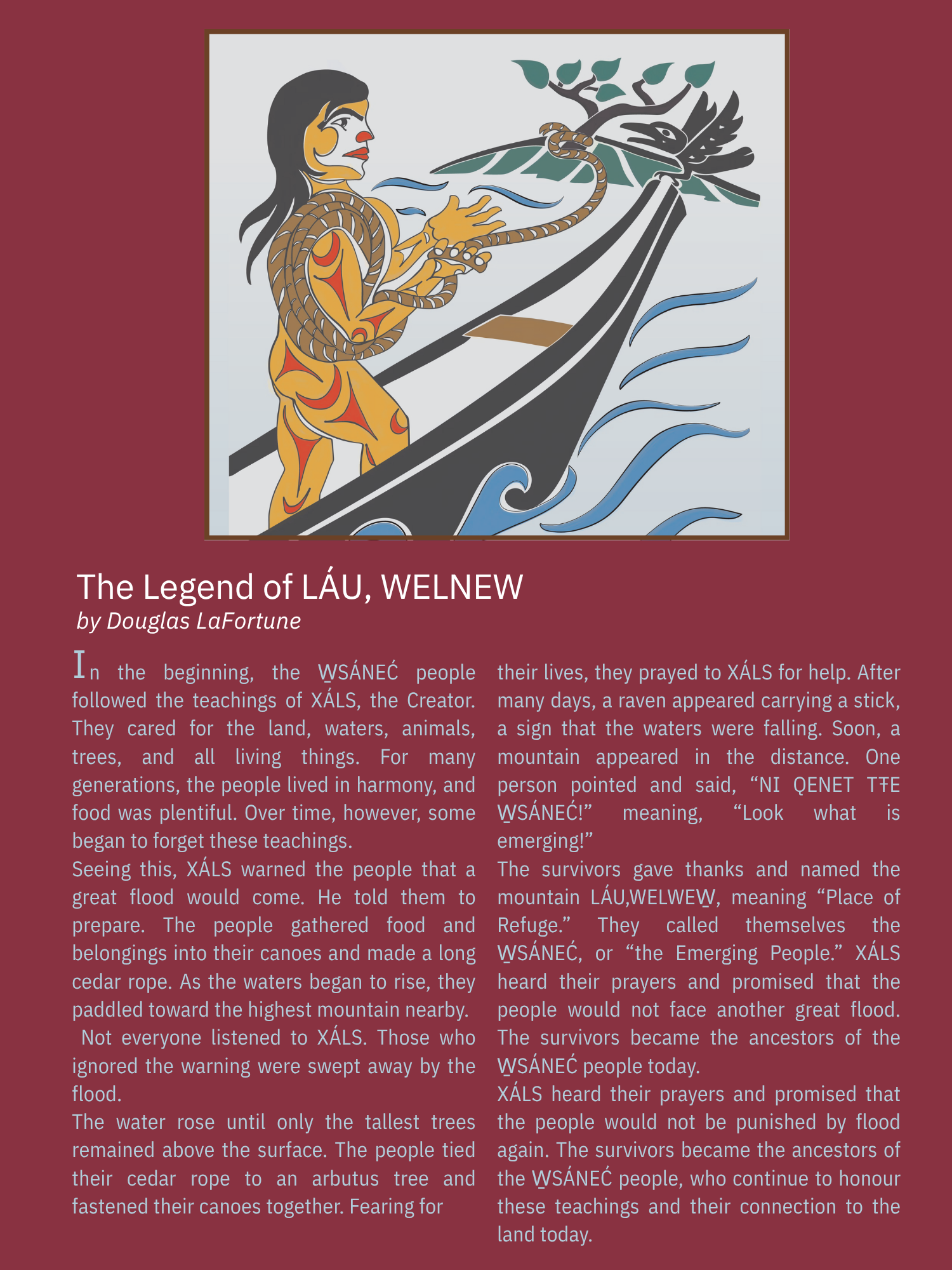
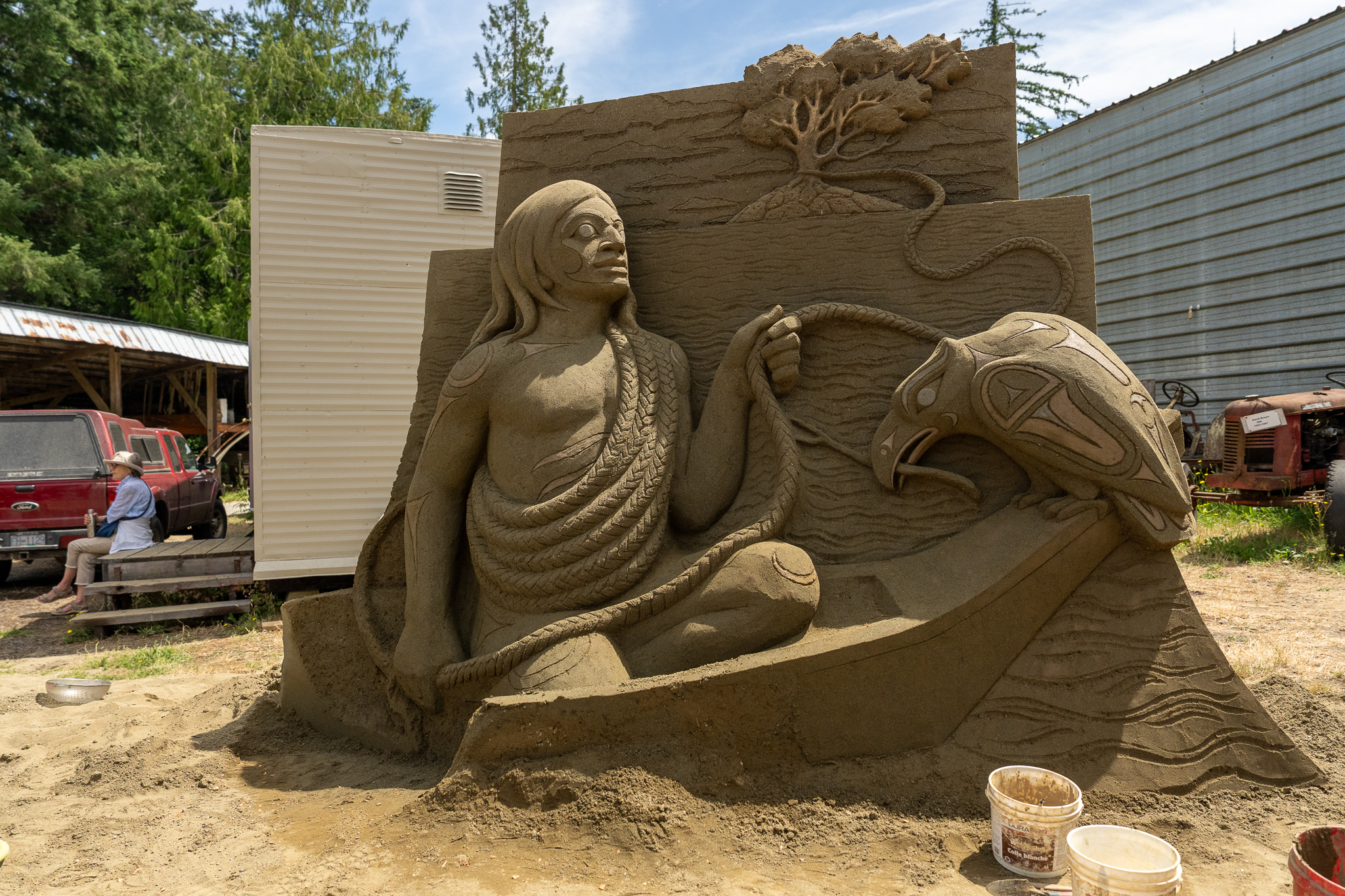
Indigenous Artist
Douglas LaFortune is a highly respected Coast Salish artist of Tsawout and Lummi heritage whose work has played an important role in sharing Coast Salish art and culture with the world. Born in 1953 in Bellingham, Washington, Douglas grew up surrounded by the traditions, stories, and teachings of his Coast Salish ancestors. From a young age, he developed a strong appreciation for Indigenous art and cultural expression.
After studying fine arts at Camosun College in Victoria, Douglas apprenticed under renowned master carver Simon Charlie. Under Charlie’s guidance, he developed a unique artistic style that combines traditional Coast Salish designs with contemporary influences. Over a career spanning more than five decades, Douglas has worked in a wide variety of mediums, including carving, painting, printmaking, masks, rattles, feast dishes, and monumental totem poles.
His artwork has been featured in major public and private collections, and he has completed significant commissions such as artwork for the Commonwealth Games in Victoria and a 30-foot totem pole for The Butchart Gardens.
Douglas and his wife Kathleen raised their three children in the Tsawout community on the Saanich Peninsula. Today, surrounded by six grandchildren, he continues to create meaningful artwork that preserves and celebrates Coast Salish culture, traditions, and stories for future generations.
Sand Artist
Dmitry Klimenko graduated from the Saint Petersburg State Academy of Industrial Art and Design in 2004 with a Master’s degree in Monumental Arts. Trained in the traditions of academic sculpture, he originally viewed sculpture as a timeless and serious art form meant for museums, public spaces, and monuments. His artistic direction changed unexpectedly when he was invited to replace a colleague at a sand sculpture competition in Saint Petersburg in 2004. From the moment he began working with sand, he was captivated by the material’s endless creative possibilities and the powerful interaction of shape, light, and shadow.
Since then, sand sculpture has become his passion and primary artistic medium. Dmitry is drawn to the challenge of constantly pushing the limits of what can be achieved with sand, discovering new techniques and forms with every project. For him, the temporary nature of sand sculpture is part of its beauty — each piece exists only for a moment, making every creation unique and every festival a new artistic adventure.
Over the years, Dmitry has participated in international sand and ice sculpture festivals across Japan, Russia, Canada, the United States, Kuwait, Belgium, Germany, Italy, Denmark, the Dominican Republic, Holland, Poland, and Latvia. In addition to sand, he also works in ice, bronze, and wood, bringing the same sense of craftsmanship, imagination, and expressive detail to each material.
Indigenous Artist
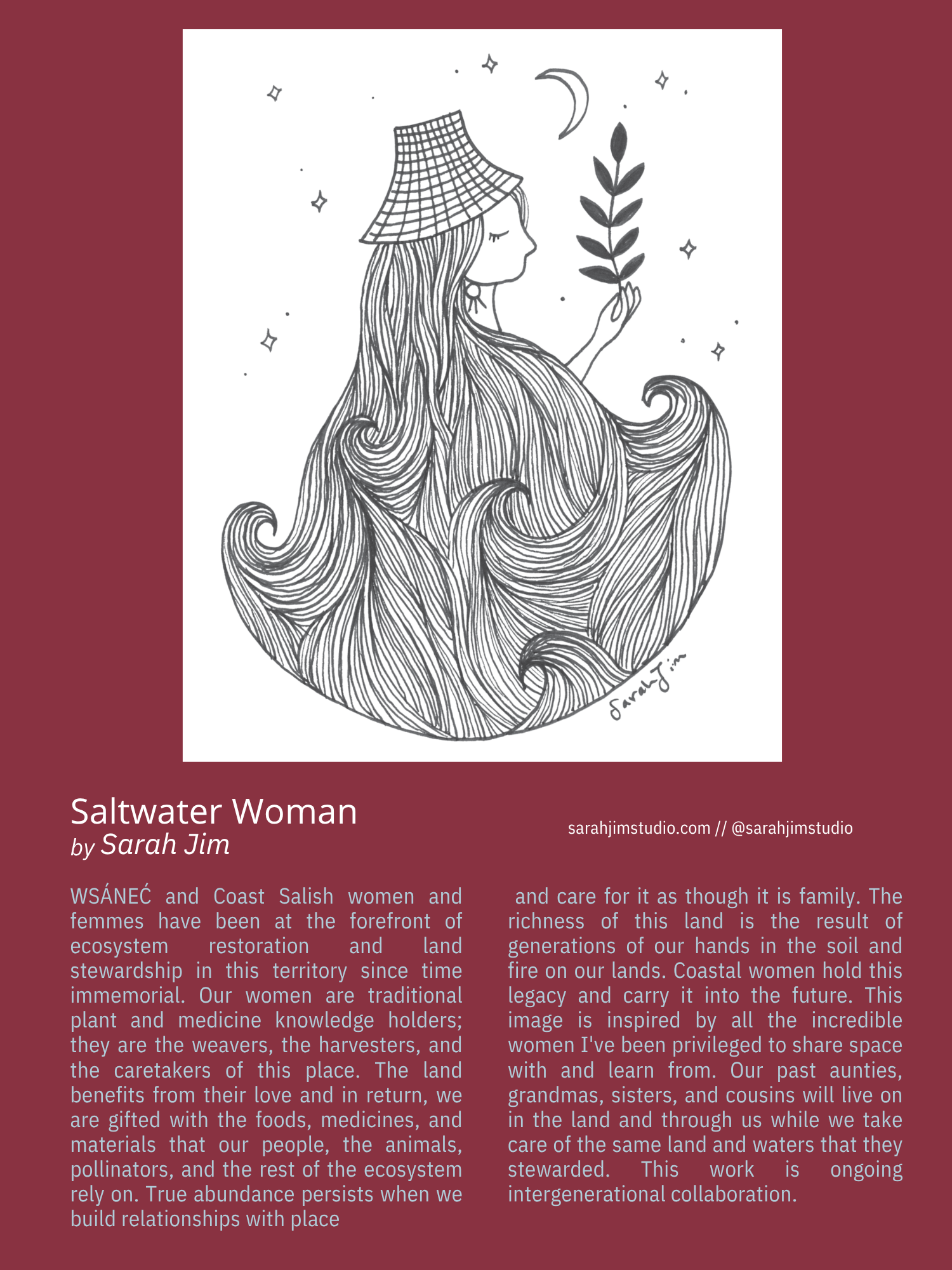
Sarah Jim is a visual artist from the W̱S͸ḴEM village in W̱SÁNEĆ territory on southern Vancouver Island. Of mixed Coast Salish, Mexican, English, and Russian-Jewish ancestry, her work reflects a deep connection to the land, sea, and skies that the W̱SÁNEĆ people have stewarded since time immemorial. Through painting, murals, public art, and design, Sarah explores themes of Indigenous land sovereignty, cultural resurgence, native plants, and the interconnectedness between people and the natural world.
Sarah holds a Bachelor of Fine Arts degree from University of Victoria and has worked in environmental restoration since 2018. Her experience working on the land has become a major source of inspiration, deeply influencing both her artistic practice and community work. Alongside her artwork, she has contributed to initiatives such as the W̱S͸ḴEM Ivy Project and Indigenous language revitalization through the W̱,SENĆOŦEN IST Program at W̱SÁNEĆ College.
Sand Artists
Sèveline Beauregard was born in the forests of Québec, Canada, where she developed a lifelong passion for art and creative expression. After spending ten years training and performing as a circus artist, she followed her family’s artistic legacy and became a professional sculptor.
Driven by a passion for discovery, she entered the world of sand sculpting in 2018 and earned an award in her very first competition. Since then, she has traveled internationally creating large-scale sculptures in sand, snow, and ice, building a reputation for both technical excellence and artistic expression.
Today, Sèveline is the owner of Sculpture BeauRegard, continuing a respected family legacy. For her, carving is more than a profession—it is a way to stay present. As she says, “To carve, you have to be here, in the present moment.”
Joris Kivits began his creative career long before discovering sand sculpture in 2006. Prior to entering the world of sand carving, he worked as a freelancer across a wide range of artistic disciplines including graphic design, photography, illustration, wall painting, and art direction for film and television productions. He also specialized in the design and technical support of multimedia presentations for conferences using PowerPoint and Keynote.
Since discovering sand sculpture, the medium has become his primary artistic focus. Joris participated in his first sand project in Lommel, Belgium in 2006, and quickly became involved in more international projects, connecting with fellow sculptors throughout Europe. Through these collaborations, he earned the opportunity to compete in Berlin, Germany in 2008.
Inspired by the fleeting nature of the material and the remarkable speed at which monumental works can be created, Joris continues to shape his ideas and imagination through sand. To him, sand sculpture is much like a theatrical performance — something that exists only for a moment, leaving behind memories and photographs once it disappears.
The ceremonious public unveiling of these sculptures and their deep-rooted stories was planned for a day that is typified by fireworks, bagpipes, maple leaf iconography, and red and white everything. As widely celebrated as these annual festivities are, Reciprocity Trusts wanted to bring something markedly different to the South Island for Canada Day this year – something that treated Indigenous influence not as an afterthought or as an additive, but as the foundation.
X̱I¸ÁM¸ Stories in Sand was something completely new and completely necessary – bringing Indigenous and non-Indigenous folks together in celebration and collaboration at a time marked by misinformation, division, and attacks on Indigenous rights. When public conversations about identity, history and belonging are feeling increasingly polarized, X̱I¸ÁM¸ Stories in Sand offered another way to gather on Canada Day: through story, art, food, family and relationships – across cultures, united by care for the lands we share.
X̱I¸ÁM¸, pronounced whee-em, means “to tell a story” in SENĆOTEN.
Reciprocity Trusts supported X̱I¸ÁM¸ Stories in Sand as the title sponsor and central organizer. Reciprocity Trusts is committed to changing the culture of private property on Indigenous lands by offering long-overdue pathways to reciprocity for those who believe that our co-existence on shared lands requires facing the truth of our difficult histories, practicing care, and sharing joy and abundance with one another.
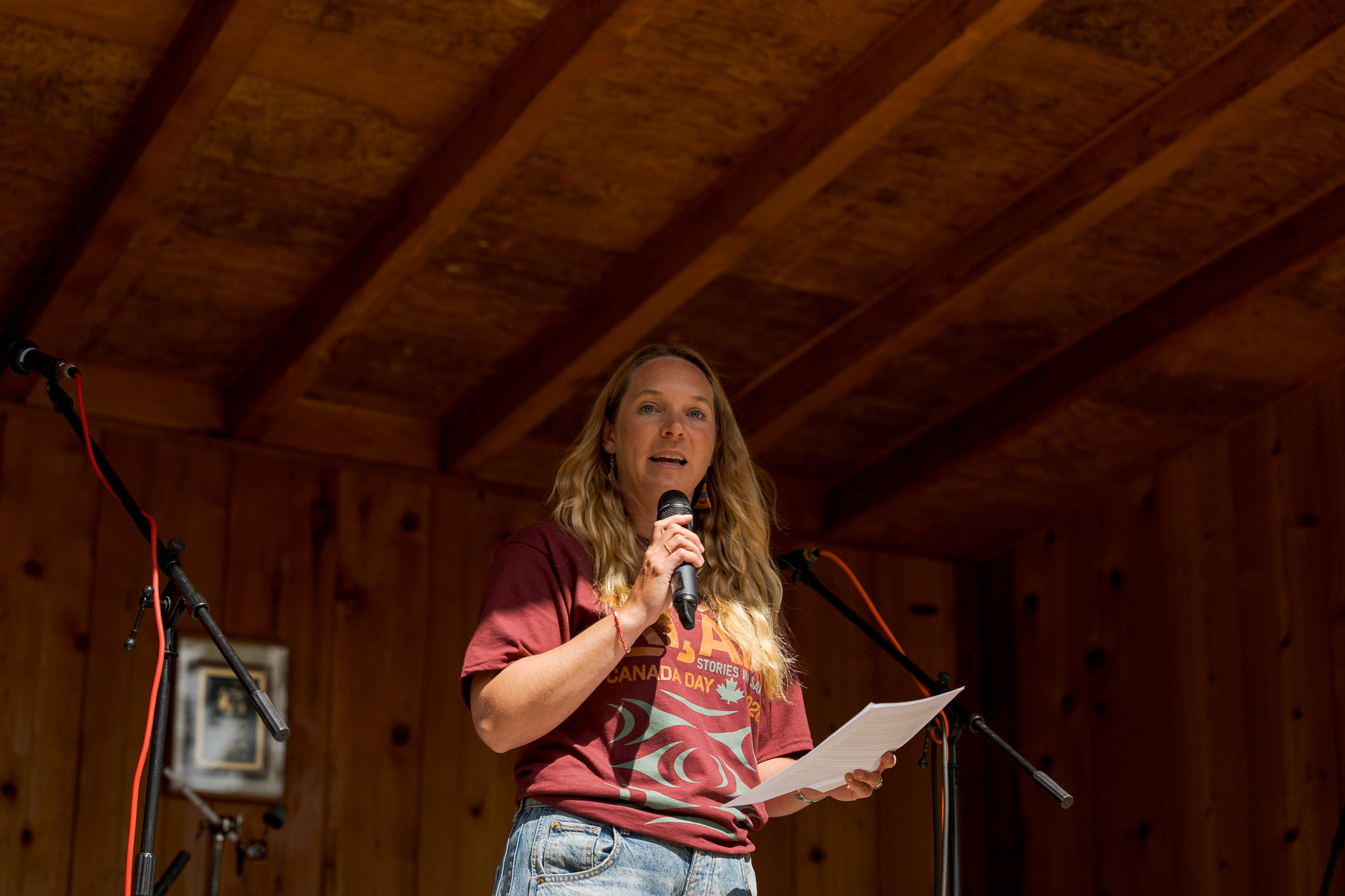
“X̱I¸ÁM¸ Stories in Sand is reciprocity in action. It is a public celebration rooted in local Indigenous leadership, local stories and local relationships.”
Sarah Reid, Executive Director, Reciprocity Trusts
We were deeply grateful to have been trusted to help bring to life a dream long held by South Island Reciprocity Trustee Chief Abraham Pelkey and world champion sand sculptor Damon Langlois. The idea sparked while sitting on a bench together watching their kids play, when Chief Pelkey said, “You know, we should bring back a sand castle event like they used to have at Cadboro Bay.” For Langlois, this was around the time he was finishing his book Stories in Sand, and he was thinking the same thing.
Langlois said the idea quickly became something deeper than a sand sculpture event. “One of the aspects I enjoyed most as creative director for the One Thousand and One Nights sculpture build in Kuwait was exploring ancient stories — stories that connected cultures and regions — and presenting them in a way that was both culturally authentic and immersive,” he said. “When Chief Pelkey brought up the idea, it felt almost synchronous: the possibility of exploring the ancient stories of this land in sand.”
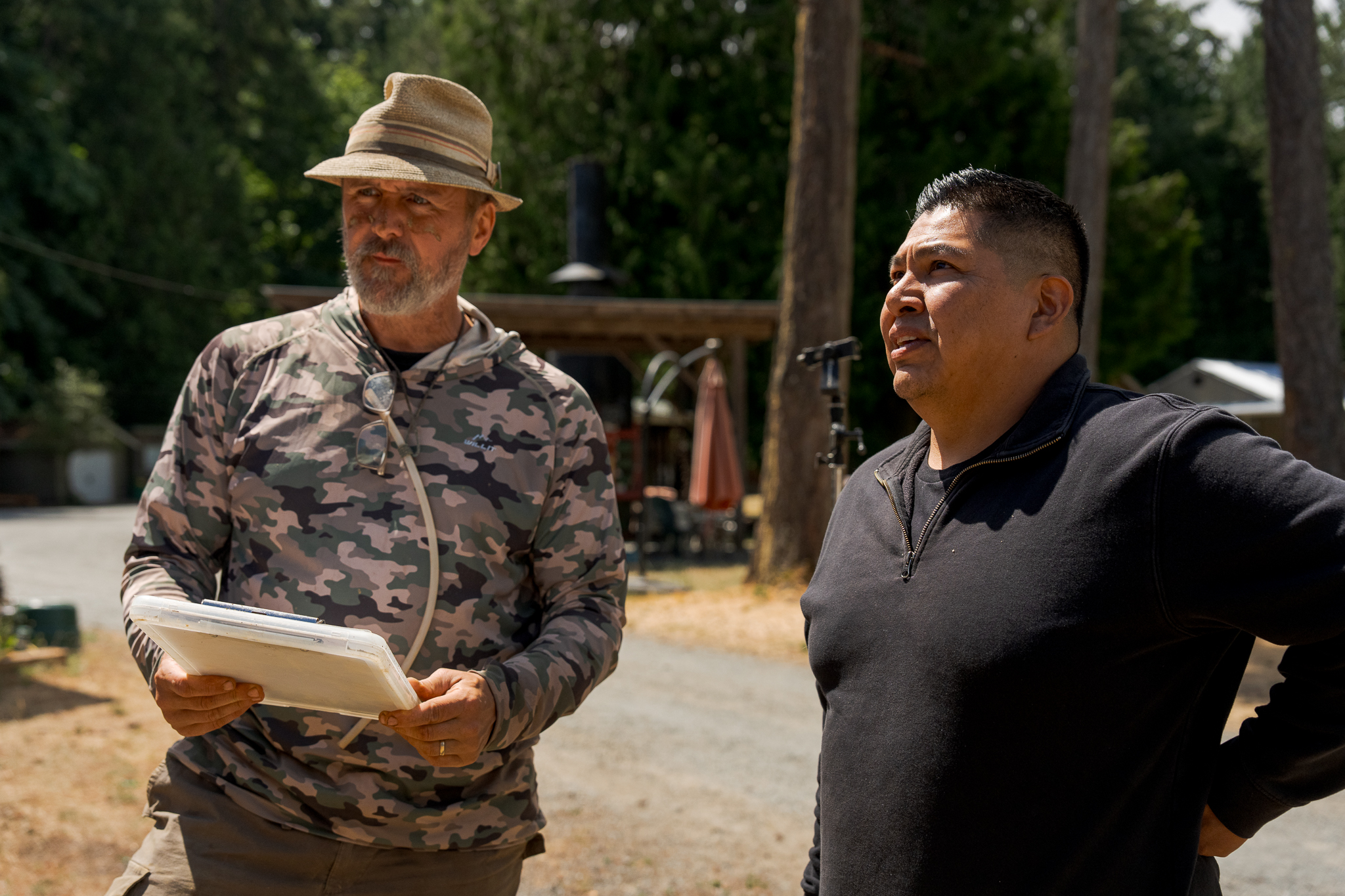
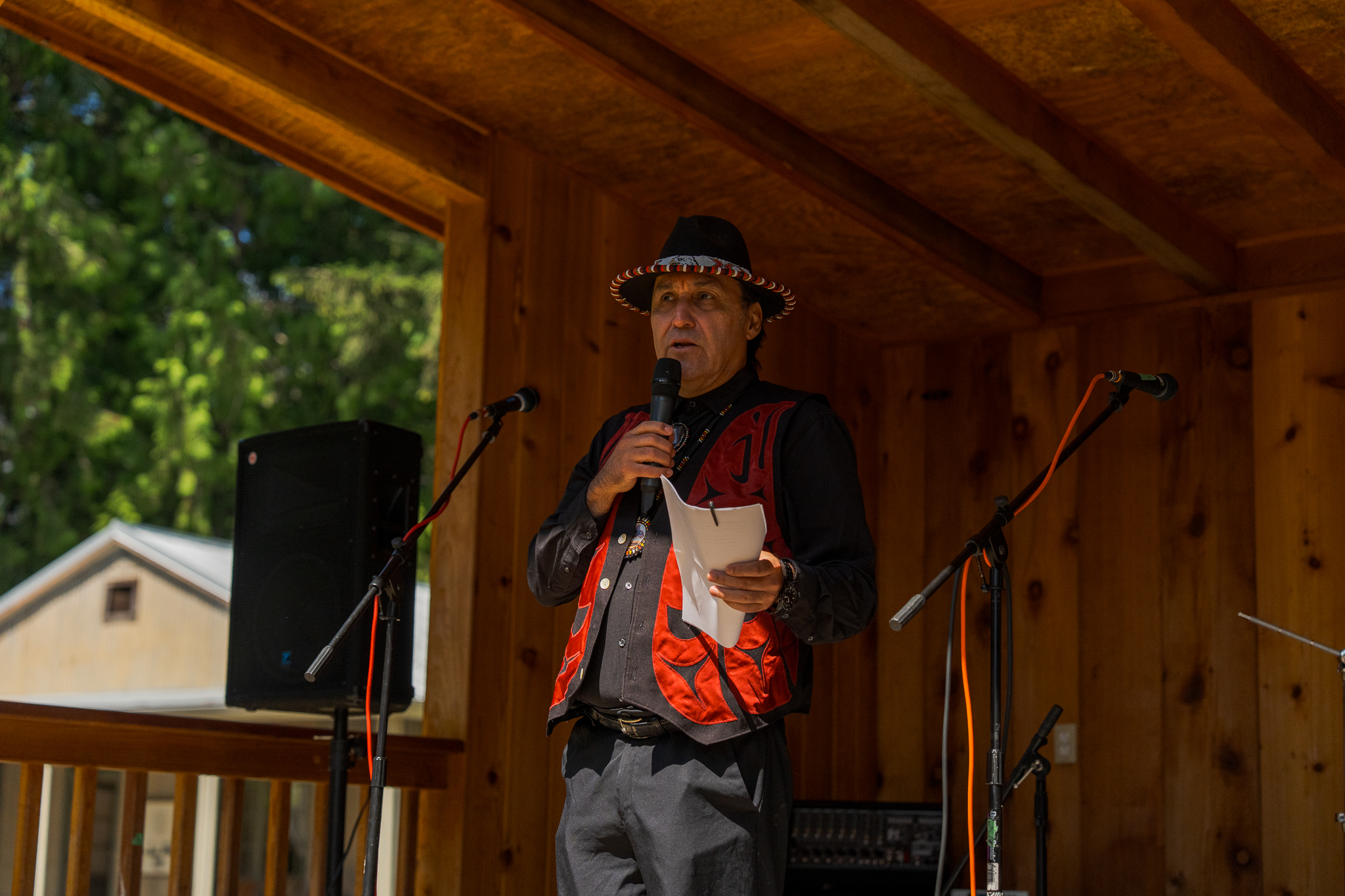
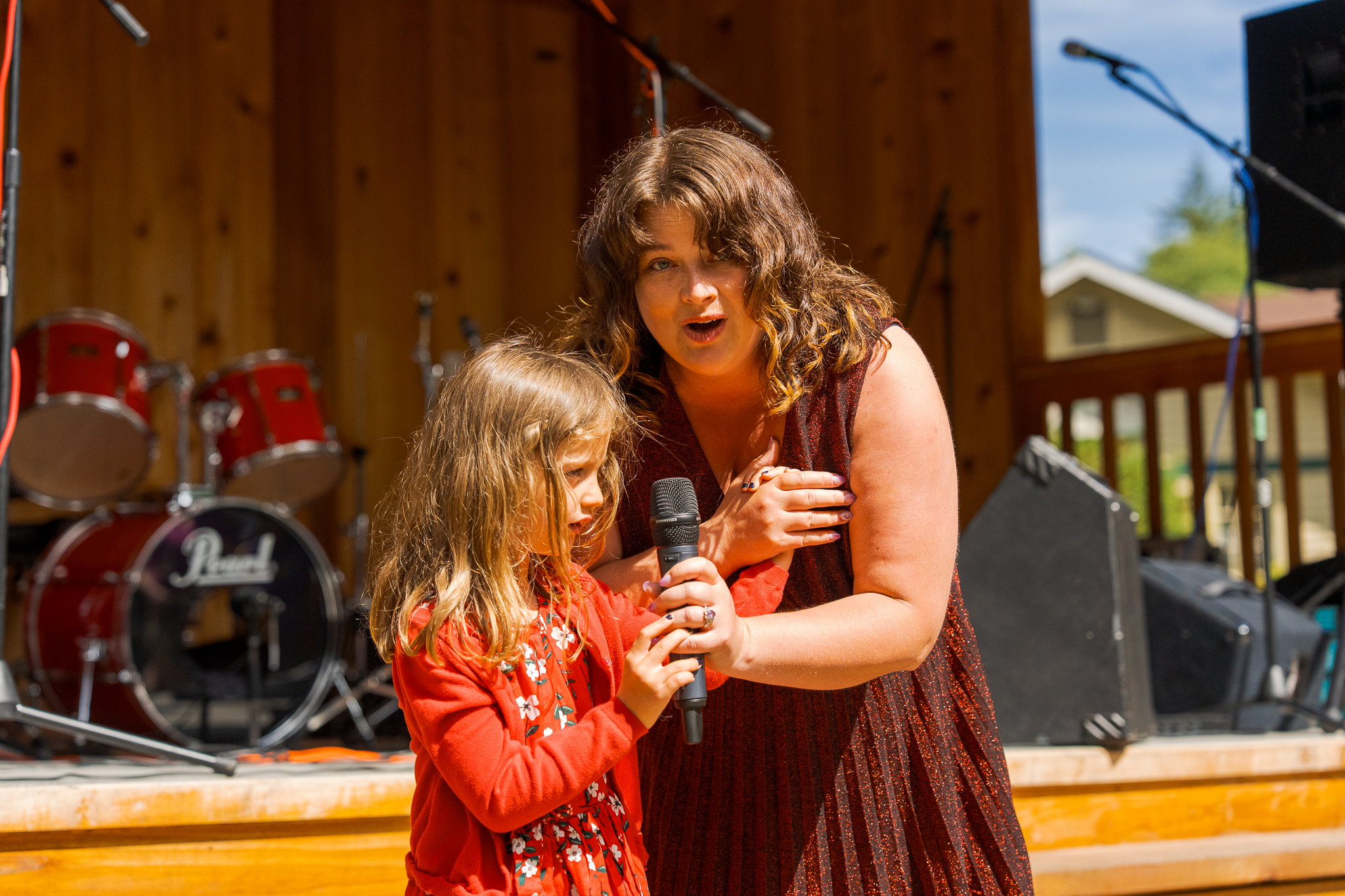
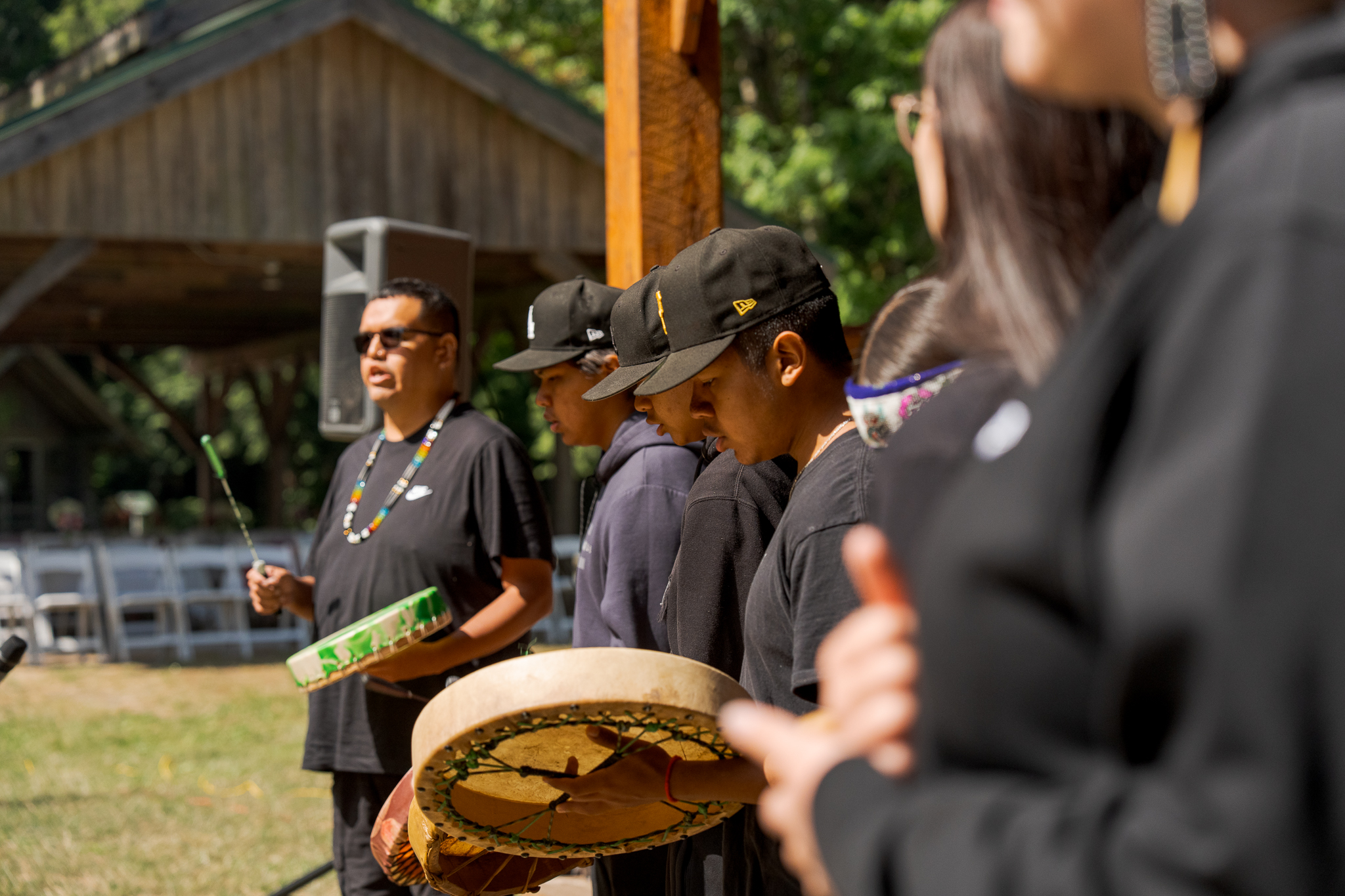
What began as a seedling of an idea shared between two friends ultimately turned into a festival that saw hundreds of people gathered to witness the origin stories of this land built in sand. X̱I¸ÁM¸ Stories in Sand brought people together from all over the South Island to celebrate Coast Salish origin stories on a day that asks us to think about the sorts of collective identities and relationships that define us.
After months of planning, it was deeply impactful to see this event come to life and to share it with so many. Thank you to everyone who came out and made this an unforgettable celebration. We can’t wait to organize and share more experiences like this with you in the future. Above all, this was a story of friendship and coming together to celebrate art, storytelling, and what it means to live together.
“This was a celebration for everyone on the South Island. It asked people to come together not by ignoring or rewriting history, but by listening to the foundational stories of the place they love.”