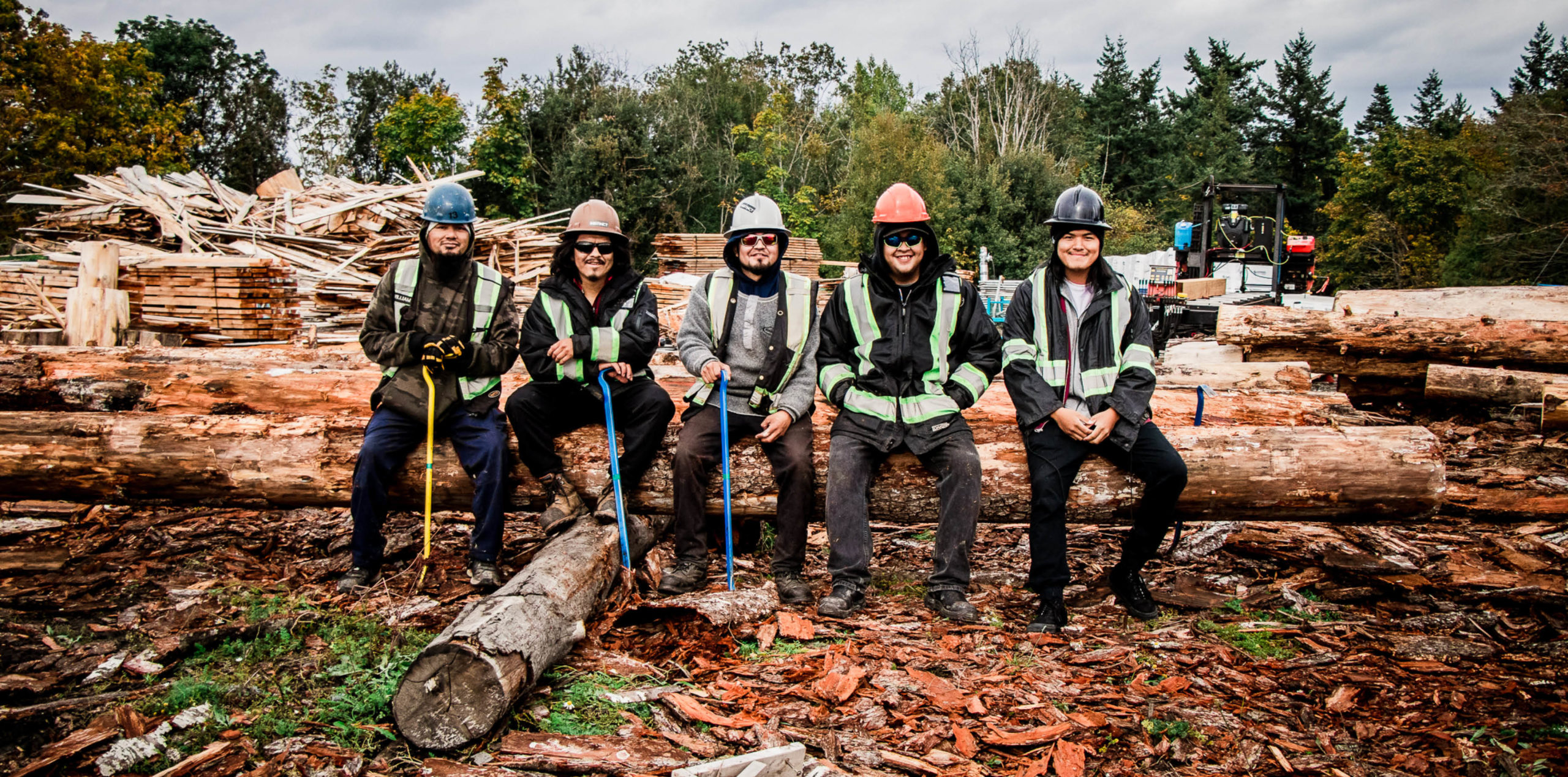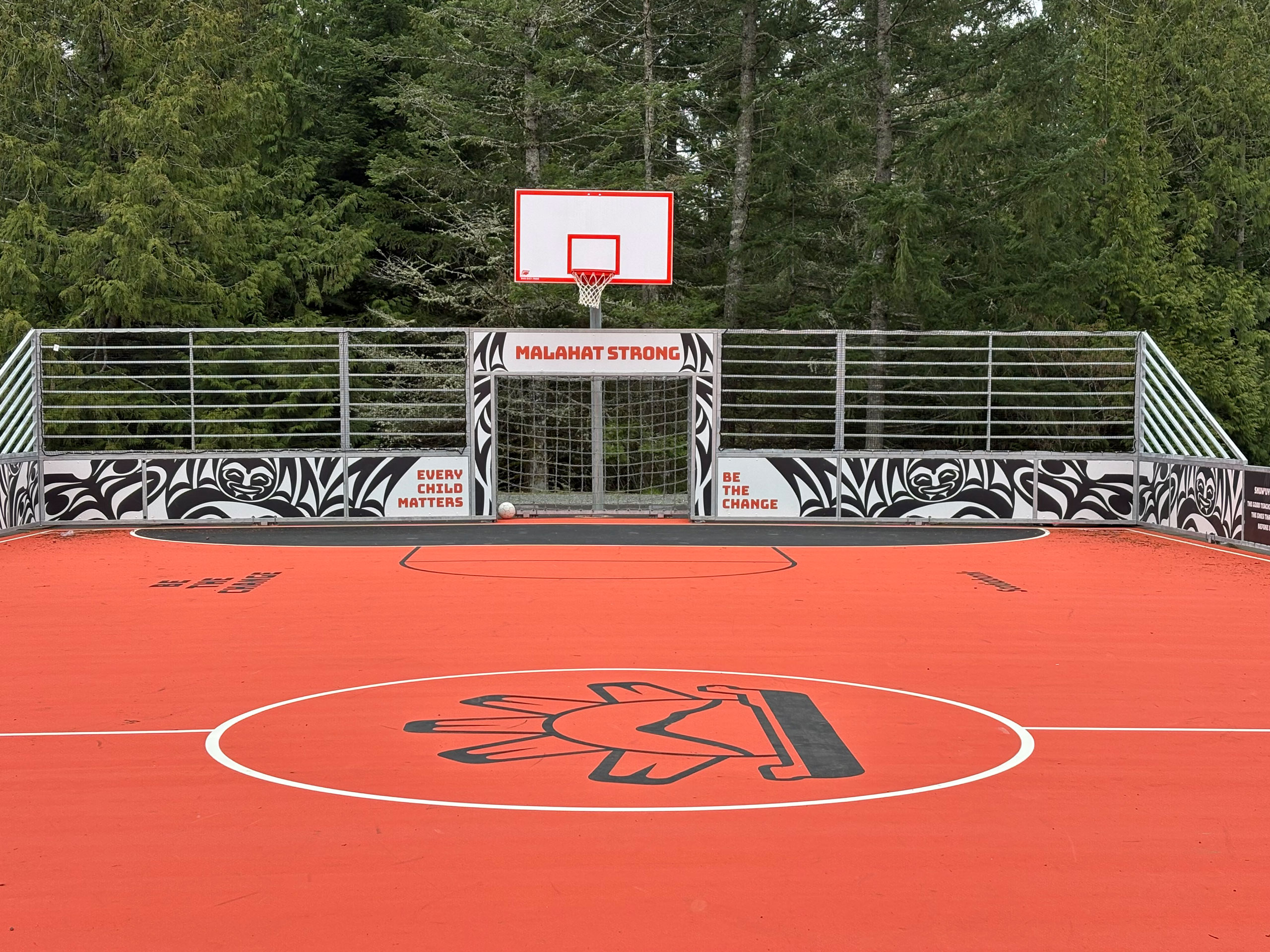
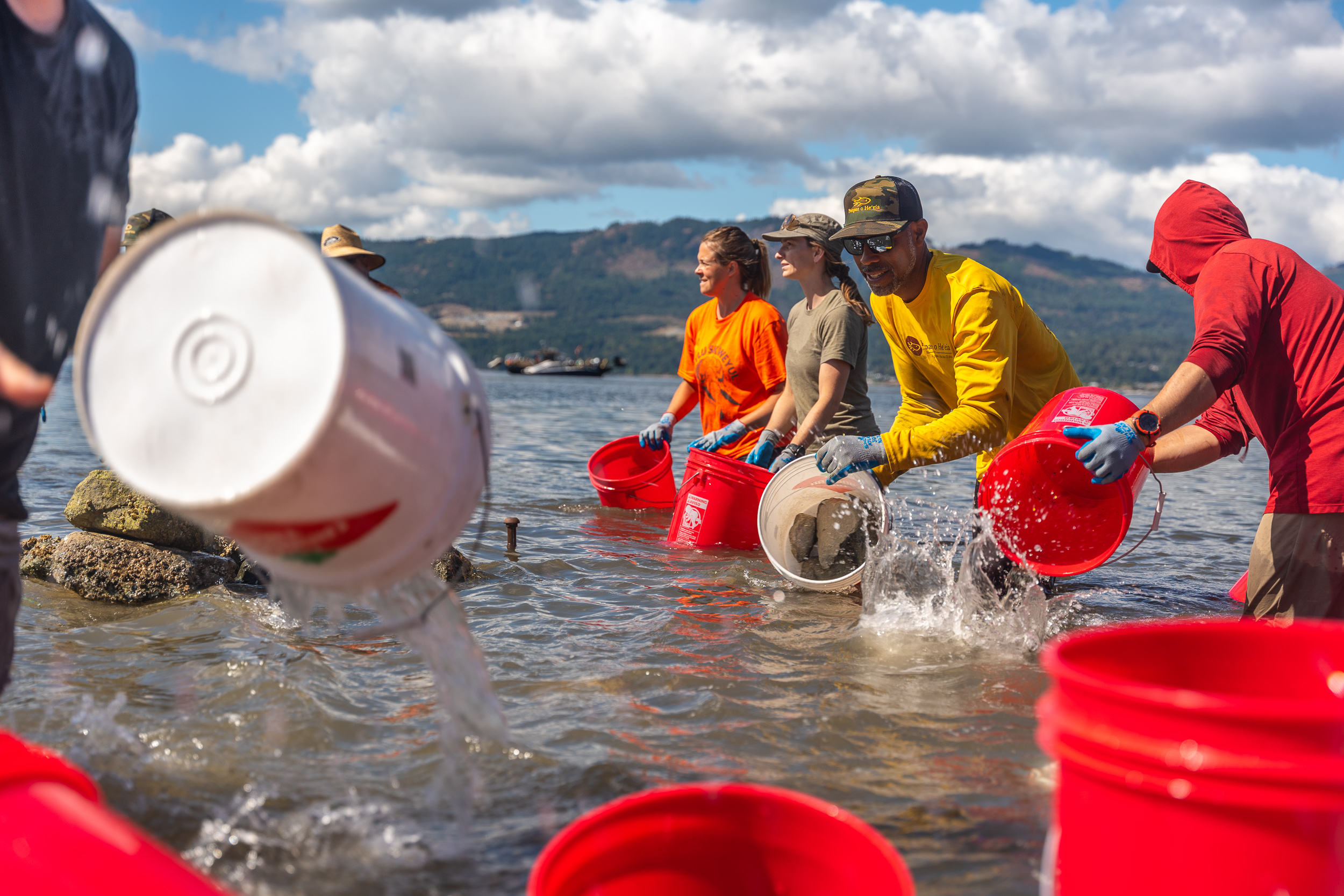
On the morning of August 6, 2025, mist drifted up off the branches of Douglas firs in front of the Pauquachin community centre across from Coles Bay. Friends of the Nation, with sunscreened noses and water bottles clipped to their belts steadily streamed in through the front doors, warmly welcomed by beaming S’uylu Skweyul organizers who handed them tote bags of Nation branded swag and directed them to a breakfast feast. After warming their bellies, troupes of volunteers treaded down Pauquachin Lane to a glistening Coles Bay, where they formed an assembly line on the tidal flats and began filling and passing buckets of rocks as their gumboots sank slowly into the soft sand used to the hard press of the ocean’s hand.
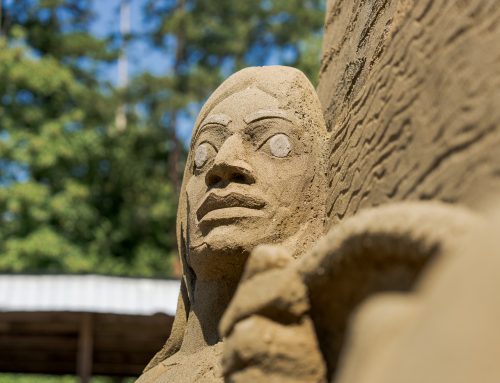
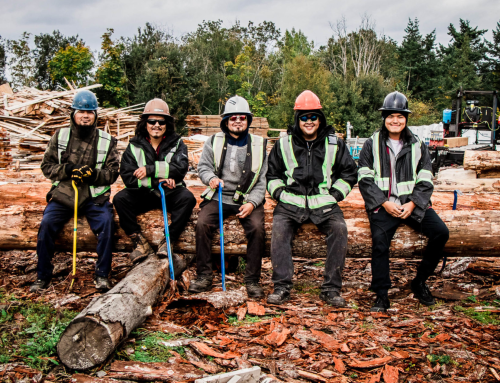
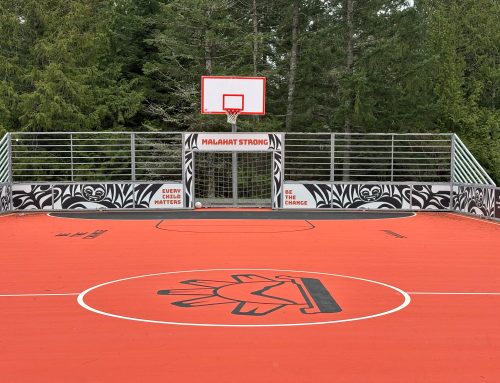
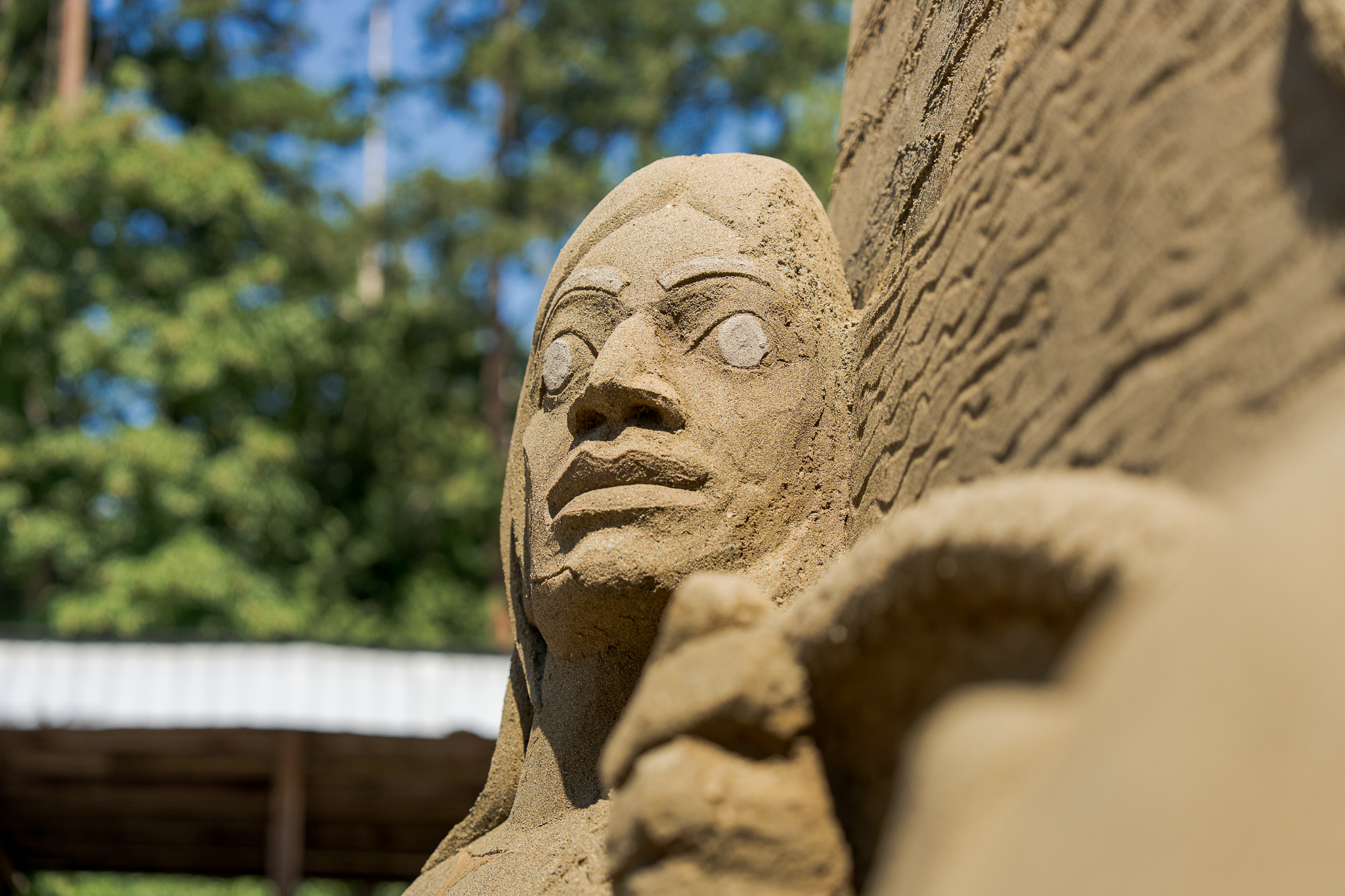
Supported in part by South Island Reciprocity Trust funds, Pauquachin S’uylu Skweyul (Spirit Days) is an annual celebration of community involving activities to uplift Pauquachin artists, lands, and peoples. This year, S’uylu Skweyul focused on reclaiming Coles Bay: inviting hundreds of community members, global First Nations relatives and local partner organizations to participate in building a 250-meter sea garden wall — continuing a 4-year shellfish revitalization effort. Reciprocity Trusts was grateful to be a part of this important celebration and contribute to Pauquachin First Nation’s historical sea garden reclamation.
A familiar story for coastal First Nations, it’s been 25 years since Pauquachin members have been able to harvest shellfish in the bay that fed them for thousands of years prior to the introduction of pollution, waterfront privatization, and urban run-off. This has had implications for Pauquachin’s food sovereignty and the ability to maintain and pass on sea harvesting and stewardship practices between generations.
The sea garden, also known as a clam garden, is an ancient Coast Salish mariculture technology for engineering healthy and biodiverse shorelines, honed since time immemorial and tied to specific governance structures and sustainable food systems. Sea gardens come in various forms, but typically see the building of a rock wall along the low tide line that terraces the beach slope to extend the intertidal zone that is preferred by a range of culturally valued species (Groesbeck et al. 2014, Jackley et al. 2016, Salter 2018).
Not only did Pauquachin S’uylu Skweyul see the revitalization of ancient Coast Salish mariculture technology and active stewardship of a bay that has been just as affected by colonization as the Nation; it also brought together people from all different walks of life to participate in this landmark event. Everyone invested in a relationship with Pauquachin, Coles Bay, or the revitalization of Indigenous mariculture was invited – from first responders like the Coast Guard and RCMP, to environmental consultants and water quality testers, to visiting Kanaka Maoli and Indigenous Nations throughout the Salish Sea, to Reciprocity Trusts and other non-profit societies. Working all together, guided by Indigenous knowledge, with our boots in the mud, biceps burning, and stories and laughter carrying down the line and out into the sea.
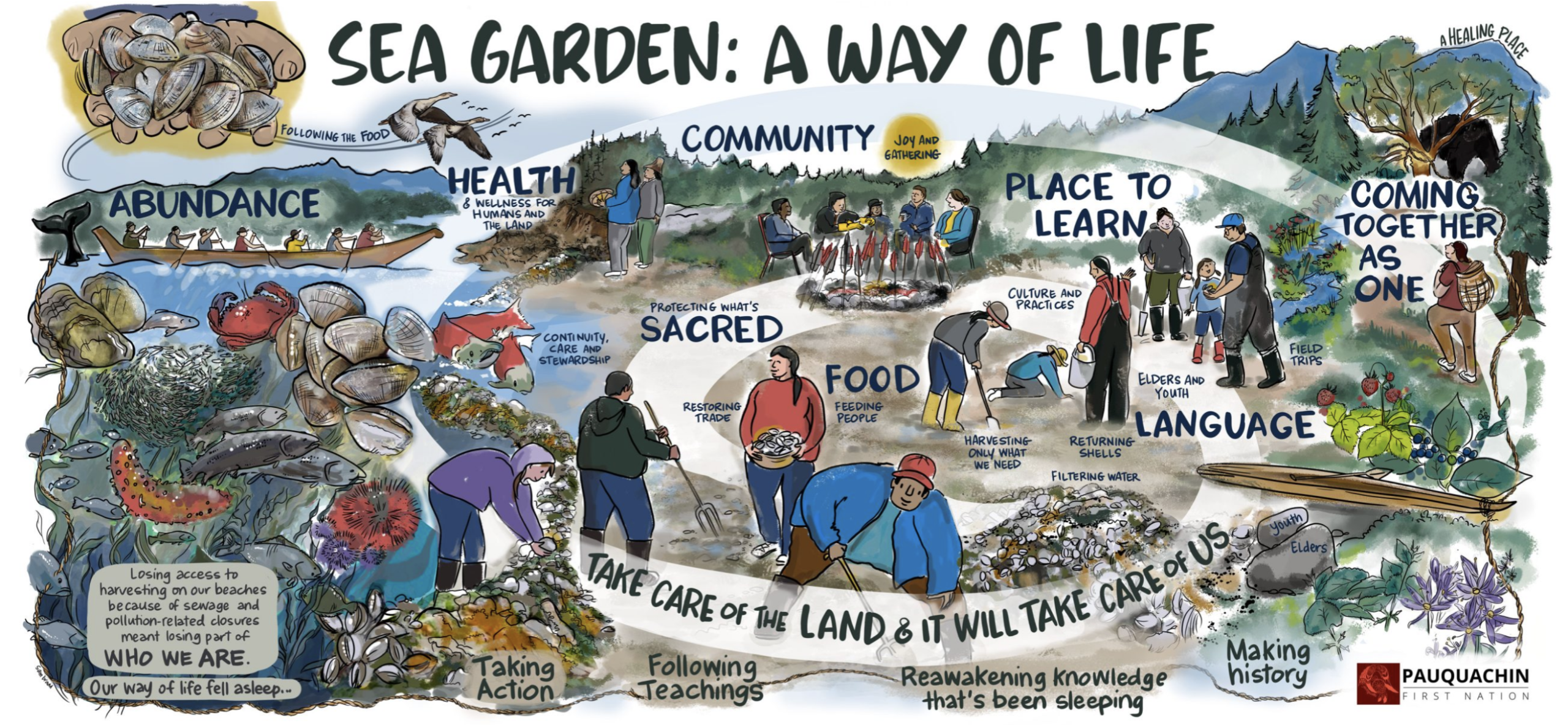
Illustration by Sam Bradd
References
https://drawingchange.com/project/illustrating-a-sea-garden-for-the-pauquachin-first-nation/
https://www.seagardens.net/clamgardens
https://www.pauquachinmarine.com/event-details/bokecen-suylu-skweyul-pauquachin-spirit-days